Article By: Terry B.
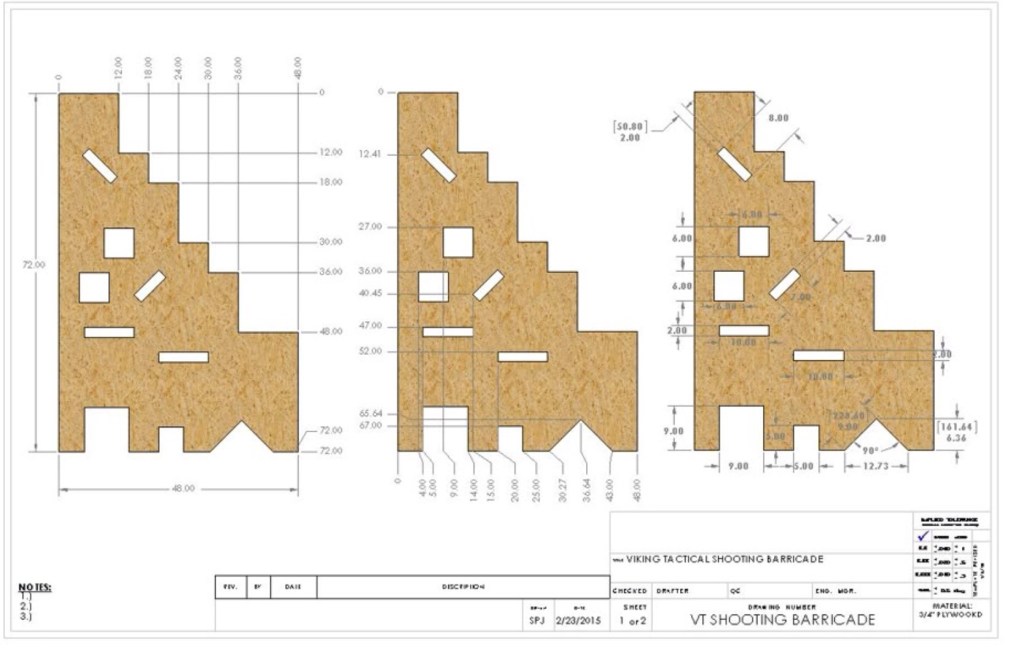
In the world of law enforcement firearms training, there’s no shortage of gear promising to sharpen an officer’s edge. But few tools have earned their place on the range the way the Viking Tactical (VTAC) positional shooting wall has. What looks like a simple sheet of plywood cut with odd‑shaped ports is, in reality, one of the most effective—and humbling—training platforms for officers preparing for the unpredictable nature of armed encounters.
Training for the Fight You Don’t See Coming
Real gunfights don’t happen from a perfect stance. They happen from compromised positions, behind imperfect cover, at awkward angles, and under stress that punishes hesitation. The VTAC wall forces shooters to confront that reality head‑on.
Each port demands a different body position—standing, kneeling, squatting, leaning, bracing, or contorting into a shape you didn’t know you could make. Officers quickly learn that accuracy isn’t just about marksmanship; it’s about adaptability. The wall teaches shooters to fight from wherever the fight takes them.
Cover: A Life‑Saving Skill, Not a Buzzword
Every academy teaches the importance of cover, but the VTAC wall teaches the application of cover. Officers learn to:
– Minimize exposure
– Slice angles safely
– Maintain stability in compromised positions
– Keep vital zones protected while engaging threats
The wall turns the concept of cover into a practiced, repeatable skill—one that can save a life when rounds start moving.
Weapon Manipulation Under Realistic Stress
Shooting from non‑standard positions exposes weaknesses that flat‑range training hides. The VTAC wall forces shooters to run their weapon cleanly even when:
– Their grip is compromised
– Their stance is unstable
– Their sight picture is unconventional
– Their body is contorted around cover
This is where officers discover whether their fundamentals hold up under pressure—and where they build the confidence to know they can fight through adversity.
Decision-Making Under Time and Stress
Every port is a problem to solve. Which angle is safest? How do you stabilize the shot? What’s the fastest way to transition to the next position? The VTAC wall builds the mental agility officers need when seconds matter and hesitation is costly.
Confidence That Carries Into the Field
Perhaps the greatest value of the VTAC wall is the quiet confidence it instills. When officers know they can make accurate hits from any position, behind any cover, under any condition, they carry that assurance into every call. Confidence isn’t bravado—it’s preparation. And preparation is survival.

 Thinking Man's Corner
Leave a comment