
Article By: Leo H.
I have found that retired folks often sit around and ponder things that usually have no great significance. At least, I have found myself doing that quite a bit lately, and I hope it is not a sign of something I should be concerned with. My wife tells me I think of things no one else would worry about. That can’t be true, can it?
Recently, I found myself thinking of mindset. Specifically, the mindset that sets apart those who can “do” easily from those who “cannot.” The quote, “Whether you think you can… or you think you can’t… you’re right.” is attributed to Henry Ford. Over the years, I have found that statement to be true… especially in the realm of firearms skills.
While assisting at the range with a mandate class, I identified several different “types” of students. Some were either confident in their existing abilities or had confidence they could learn the skills necessary to pass the qualification event. They were followed by the group who were apprehensive of the learning process and hoped they would learn whatever was necessary to make it through the week. A small group fit into the category of “didn’t know what they didn’t know” and floated along in a haze of uncertainty. The final group did not want to be there and projected an attitude of, “If I make it, fine… but, if I don’t, there are no worries.” Each group had its own mindset as it related to absorbing the material necessary to excel in the task at hand.
My experience, when teaching a large group of students, is that those who exhibit confidence can prove to be either a help or a hindrance. Where the group is of the same age and experience level, the few who confidently perform each task to a satisfactory level can often assist the instructor by establishing an observable link between provided instruction and acceptable outcome. This projection can create an attitude of, “If they can do it… so can I,” among members of the class, thus providing tangible assistance to course instruction. On the other hand, if asked by members of the class to explain the process they are using, and where there is no instructor intervention, oftentimes the provided narrative creates a whole new set of issues if the accomplished student’s instruction does not mirror that of the primary instructor for the group. In those instances, the instructor may find themselves combating issues each time a new relay of students approaches the line. Dialogue must address this possibility before it becomes an issue.
Then there is the group I enjoy teaching the most. The students who have never owned a handgun and may have never considered learning how to properly shoot if it was not a part of their job description. At the point they recognize the importance of receiving professional instruction and adhere themselves to a structured training regime, you can see “light bulbs” going off up and down the firing line. As they become capable of identifying and vocalizing their own mistakes, you watch them move from the “maybe” crowd into the group of confident shooters. The professional instructor needs to possess the ability to recognize how to best motivate this type of student. Some will want you to explain and demonstrate proper technique multiple times. Others will only want to see it done once or twice and then be left to their own devices with minimal (safety) monitoring. Both will require some degree of positive reinforcement. It is a fine balance between under and over-instruction. Good instructors understand this and will adjust accordingly.
Next, we have those who “have no clue.” As an instructor, you may wonder why they are even there. You explain the technique or tactic in intricate detail. You then demonstrate to perfection. You ask for questions and solicit specific responses through direct questions. And then… when it becomes the students’ turn to show understanding… you wonder what they saw you do and heard you say because what they are doing is not even close to the desired outcome. These are the folks who require small group or one-on-one training if you hope to push them into an acceptable level of competency. It has been my experience when shooters at this level continue to train within the bigger group they fall further and further behind as they lose motivation due to their inability to progress at the same rate as their peers. The more they fail, the bigger the mental gap between their personal thoughts and acceptable progression. Criticism on the part of the instructor must be carefully thought out, as constant vocal reinforcement of negative performance only serves to enhance student inability as they mentally focus on everything they are doing wrong. Instead of, “You’re jerking the trigger again,” stress the corrective action in a positive manner like, “Remember to control the trigger through continuous and consistent pressure until the shot breaks,” to assist your student in moving from a negative into a positive mindset. Do not allow the last thought before the next firing sequence to be one that is negative.
Finally, there are those who do not want to be there at all. They may feel they already know it all or have no vested interest in learning… either of the topic itself or from you, in particular. Some may become interested as the training progresses. Others you may not be capable of establishing a rapport with no matter how you may try. There, too, are those who truly believe there to be no relevance in learning the way of the gun as they have confidence there are other ways of resolving any situation without a need to resort to the use of force. It is always my hope for those who fall in this category that they find an interest in developing at least a rudimentary skill set before we, as instructors, are forced to use their encounter as a negative example and they are no longer capable of rebuttal.
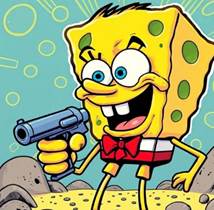
I once came across a quote wherein whomever the author may have been stated, “When it comes to learning… you may choose be a rock or a sponge.” In my mind, I picture the knowledge imparted by the lesson at hand to be depicted by a large bucket of water that is being slowly poured in your direction. Once that water arrives, it can either be soaked up in its entirety by the sponge to be utilized well into the future… or you simply have a wet rock sitting in a pool of water that slowly evaporates without benefit to any. I would say to you, when given the choice… always be the sponge.
“The only source of knowledge is experience. While it is wise to learn from experience, it is wiser to learn from the experiences of others.” – Rick Warren
Semper Optimum!

 Thinking Man's Corner
Leave a comment