Article by: Leo H.
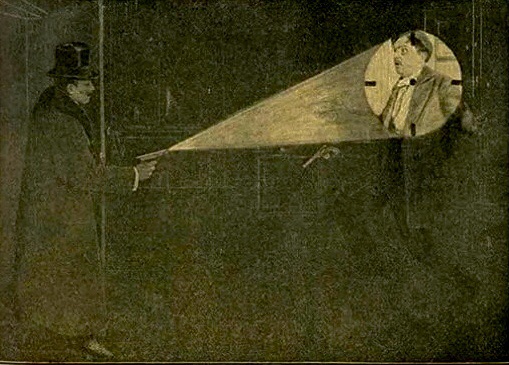
In his Article, “Somewhat Deep Thoughts (Maybe?),” my colleague, William G., insinuates I do not like weapon mounted lights (WML) on pistols. I felt the need to defend my stance a bit… thus this article. To be fair, I am of the opinion pistol mounted lights do have a purpose… I just do not believe everyone needs a WML.
I come from the era of law enforcement where your employer provided a job, a badge, and a car to patrol with. Whatever else you might have in the way of equipment you bought yourself. When I first hit the street, my gross pay was $680.00 per month. Much thought went into equipment selection since your paycheck had to stretch a long way. If there was not an immediate need for an item, it probably didn’t get bought. As this was the revolver era, there was no need to think of a WML as they did not exist as a readily available implement.
At the time, there was no such thing as a tactical’ light. Most folks simply used an Eveready flashlight that was either a bright chrome metal or black plastic bodied light generating a gigantic 15 lumen when powered by two D- cell batteries. Contrary to what today’s officers might think, it was just as dark and the bad guys just as committed to avoiding jail as they are today. So… a light of some sort was a welcome tool.
There was not a great amount of time dedicated to baton training (what today’s officers would call impact weapon management). As a result, officers would often find themselves having to defend against an assault while holding a flashlight which then became an impact weapon of sorts. Usually, the flashlight exploded into an assortment of pieces and parts with the officer left holding a bent or cracked flashlight body while batteries, lens assemblies, and other miscellaneous parts flew around everyone’s head with little or no control of the offender being achieved.
The first generation of “tactical” lights was born. The Kel-Lite and Maglights provided anywhere from 40 to 100 lumen depending on the number of C or D-cell batteries they used. Around this time, we also saw the introduction of rechargeable batteries that would be working perfectly fine at one minute and then leave you standing alone in the dark woods the next. These new lights were very popular due to their rugged and solid construction. When thrown at a car refusing to stop at an officer’s direction they could bed themselves in a windshield (or so legend goes). Unfortunately, they also caused serious damage to any head with which they might come into contact. As a result, over time, most departments outlawed metal bodied flashlights which created a market for the plastic Streamlight SL-20 (450 lumen) which can still be found working the streets today.
In the mid 80’s, a company named Laser Products (which later became SureFire) developed the first weapon mounted light at the request of LAPD SWAT. Around this time, they also introduced the first small hand held tactical lights which were able to produce about 85 lumen of brightness in a very small package. In 1988, I attended a low-light firearms class in which the instructor demonstrated various techniques which could be accomplished with this small light thus demonstrating its superiority over the much larger lights most officers still carried. I bought my first ‘SureFire’ immediately after that class and still have it today (it still works]. Since that time, I have bought more SureFire products than I can recall and have probably spent more on flashlights than I did on my first car. There are quite a few companies out there manufacturing tactical lights today. I will say… based upon personal experience and judging what I have seen on the range over the years, all lights are not created equal. You generally get what you pay for and cheap usually doesn’t mean better.
For me, the D-cell lights went into my duty bag to be used for traffic direction and the smaller tactical light found it’s way onto my duty belt. I generally carried spare batteries duct taped to my ballistic armor not wanting to find myself in the dark woods without light… again. Eventually, I found it easier to just carry two lights on my belt.
The FBI, Harries, Ayoob, Chapman and other flashlight techniques gave way to the Roger’s and Neck-Index methods as handgun shooters adapted from barrel mounted activation switches to those mounted on the end-cap of the new smaller sized flashlights. Many of the old techniques would still work with the newer flashlights… but, there was always some degree of awkwardness involved when mating the gun and light. Oftentimes, the cone of illumination was directed either to the ground or to the sky as officers attempted to successfully identify what they might have to shoot. Obviously, there had to be a better way.
Enter the handgun mounted weapon light.
I had been using WML for both my shotgun and rifle for quite some time. I was extremely happy when SureFire began producing the fore-end mounted lights as it meant I no longer had to duct tape flashlights to shoulder fired weapons. However, it seemed the suppliers of duty holsters were not yet satisfied the newly generated handgun mounted lights would be accepted by the law enforcement community, as a whole, and the selection of available holsters for handguns mated with a light were few and hard to find. As a result, I continued to use hand held lights if the situation called for a handgun over a shoulder weapon.
Once upon a time, I was on a SWAT call-out where my partner and I had entered an unlighted hotel room looking for an individual alleged to be armed and possessing no desire to be apprehended. As we came to the last place in the room providing a hiding place, I found myself in the position of holding a flashlight in one hand, a handgun in the other, and needing to open a closed door while simultaneously lighting the interior of a bathroom with my other hand. Wait… there was no other hand. While we were able to successfully resolve our room search without getting shot; the need for a WML for my handgun became evident. This seemed to be especially true in tactical situations where the probability of an armed suspect, hidden in darkness, could be the reality of the moment.
This was a time where the plethora of information available at a few touches of a keyboard while “surfing” the internet today was not readily available. Research had to be conducted by reading the various gun magazines or word of mouth. “Experts” were easily found in any gun store selling WMLs. Training, on the other hand, was not readily available and once the light was purchased one had to either head to the range for self-directed instruction or resort to On-the-Job training. Many times, the end result was not a product that would survive the oncoming civil trial if the wrong person was shot during the process of threat identification while utilizing a weapon mounted light. Receiving training from an instructor who actually had credentials became a necessity.
I had the good fortune to attend a SureFire Low-Light Instructor class which was developed and taught by a former member of a US special operations group well versed in low-light engagements. While attending the class (following about 50 hours of training and 200 Simunition induced bruises) it became obvious mastering the techniques required to effectively utilize a handgun mounted light took both adequate time and experience. It also became apparent that a pressure switch (SureFire Instructor preference) was far superior to toggle activators when wearing gloves or if the operator had smaller hands (grip modification required). In short, proper usage requires more than just attaching a light to a gun.
At the time I was employed as Rangemaster for my Department, handgun WMLs were only permitted for personnel assigned to either SWAT or K9 approved to carry weapon lights while performing unit specific functions. SWAT personnel received training from other SWAT personnel while K9 officers were required to attend training provided by Training Unit personnel. The weapon mounted light course attended by K9 officers was the only class I taught where there was always at least one unintentional discharge during simulated scenarios where the officer had to control a “dog” and operate the light simultaneously. The most common reasons for this seemed to be gloves or the use of a toggle switch to activate the light during the draw stroke. Both were easily negated through additional training.
Being a dinosaur, I was very resistive to the issuance of weapon mounted lights for handguns to all Departmental personnel. However, during the same time frame, our Unit did recommend weapon mounted lights for officers who attended the training provided for Patrol Rifle authorization. My stance was… “I am okay with handgun mounted lights if the Department plans to implement a training program which requires a demonstration of initial proficiency followed by an annual proficiency evaluation.” During my time, no such program was authorized.
Recently, the Department I retired from has begun issuing WMLs. The Training Unit developed and conducts a class which is required by all officers using a light. However, the caveat is that these officers must also utilize a Pistol Mounted Optic (the WML portion being a segment of the PMO class). They currently spend two days conducting training and proficiency evaluation. Hopefully time will prove this training to be sufficient.
At long last we come to my WML opinion. Is the purchase based upon a want or a need? I believe there are tactical circumstances which dictate the utilization of a WML for handguns. I feel adequate research should go into the selection of the light that will be purchased and the means of carrying the handgun sporting a WML. I also believe proper use of a WML and its related tactics and techniques require training received from competent instructors. Following this, officers should demonstrate personal proficiency on a regular basis. Departments must maintain adequate documentation of instructor credentials and officer proficiency in order to provide protection relative to potential lawsuit. I also believe there are many departments which will allow officers to carry whatever they want or whatever is cheapest. It is important to remember that everyone has to “Pay the Piper” at some point.
“Although there is no progress without change, not all change is progress.” – John Wooden
Semper Optimum!

 Thinking Man's Corner
Leave a comment